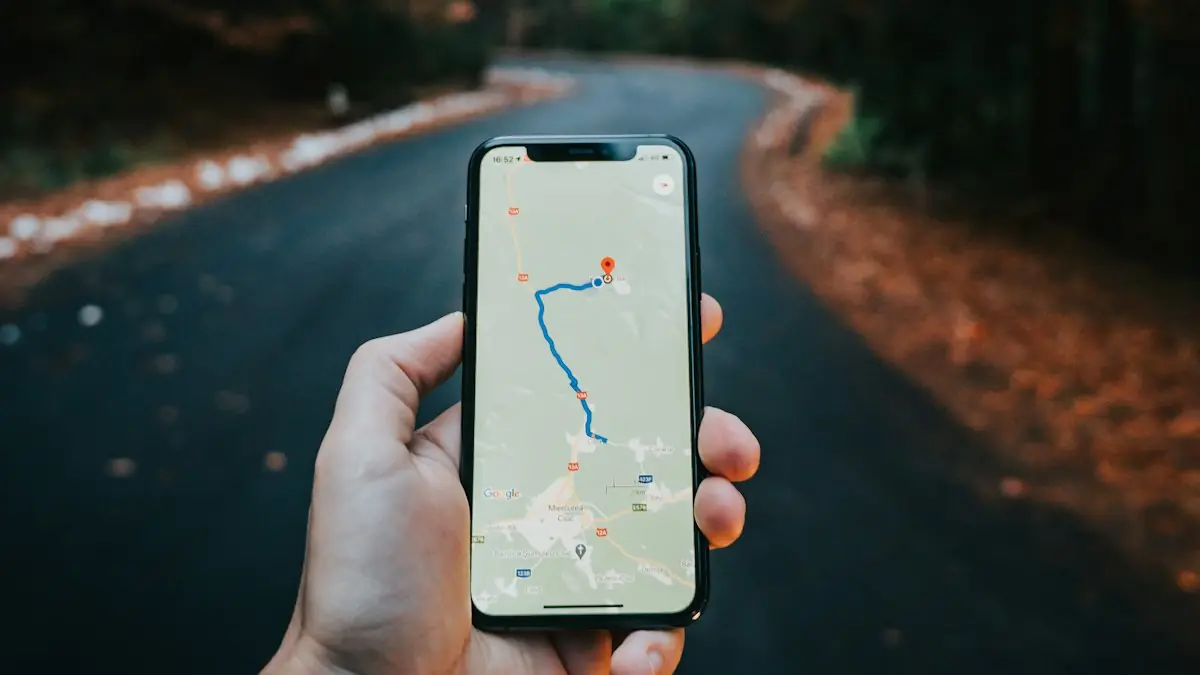
For a business with a physical location, ranking in the three-result map pack is worth more than ranking first in the normal results. It sits higher, it shows your phone number, and people tap it without ever reaching a website.
What actually decides map pack rankings
Google weighs three things: relevance, distance and prominence. You cannot change distance. So the work is entirely in the other two.
1. Complete the profile properly
Most profiles we audit are 60% filled in. Every field is a relevance signal:
Primary category chosen precisely — "Dental Clinic" not "Doctor". This is the single highest-impact field on the whole profile.
Every relevant secondary category added.
Services listed individually, each with a real description.
Opening hours, including holiday hours. Google demotes profiles it suspects are stale.
Products, attributes, and the business description using the words customers actually search.
2. Reviews, and specifically recent ones
Review count matters. Review recency matters more than most people realise — a business with 40 reviews spread over the last year usually outranks one with 200 reviews that stopped in 2023.
Build a simple habit: ask every satisfied customer, at the moment they are satisfied, with a short link. Respond to every review including the bad ones, calmly and factually. A well-handled one-star review persuades more readers than a five-star one does.
Never buy reviews. Google's detection is far better than it was, and profile suspension takes months to reverse.
3. NAP consistency
Your Name, Address and Phone must match character for character everywhere they appear — your website, JustDial, IndiaMART, Facebook, industry directories. "Shop 12, Lajpat Nagar 2" and "Shop No. 12, Lajpat Nagar-II" read as two different businesses to an algorithm.
Audit them once, fix them once, and it stays fixed.
4. Photos, posted regularly
Profiles with recent photos get measurably more engagement, and engagement feeds prominence. Real photos of the actual premises, staff and work — not stock images. A handful every month beats fifty uploaded once.
5. Location pages that are genuinely different
If you serve multiple areas, one page per area works — but only if each page is genuinely about that area. Duplicating a page and swapping the locality name is a well-known pattern and it does not work any more. Each page needs local specifics: real projects, real landmarks, real details.
6. Local links
Sponsorship of a local school event, membership of a trade association, coverage in a regional publication. A handful of genuinely local links outperform dozens of generic directory listings.
The order we work in
For a new local client we do the profile completely, fix NAP everywhere, start the review habit, and only then move to content and links. The first three are cheap, fast, and produce most of the movement. Agencies that lead with content and links on a half-empty profile are selling you the expensive part first.
Nikhil Menon
Head of Marketing at Corewebbers, New Delhi.
Google Ads & Meta certified. Has managed over ₹40 crore in ad spend for Indian brands.
Most chatbot projects fail for boring reasons: the wrong use case, no guardrails on pricing, and nobody reading the transcripts. What we have learned launching AI assistants on WhatsApp for clinics, coaching institutes and D2C brands.
A plain-English comparison for owners running production on Excel and Tally. When an off-the-shelf ERP is the right answer, when a custom build pays for itself, and the questions to ask before you sign anything.
UPI, COD, GST invoices, Shiprocket and sale-day traffic change the answer for Indian brands. How we pick a platform for D2C and B2B stores, with real costs and trade-offs.